Commercial Real Estate Guide for Business Owners in Rio Bravo
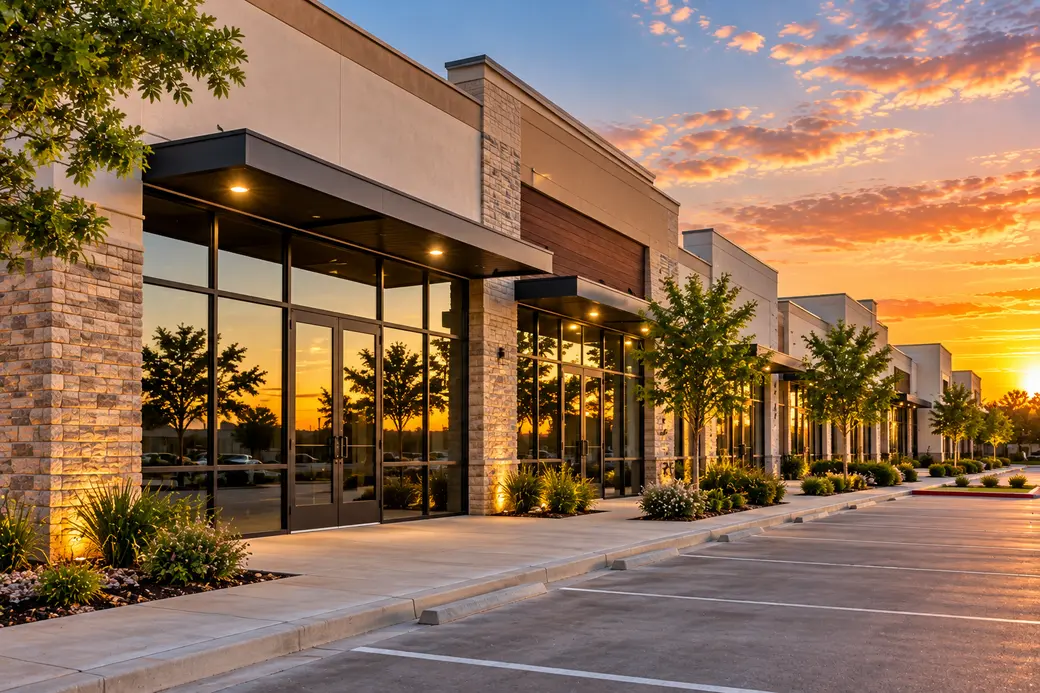
Commercial real estate in Rio Bravo should be evaluated as a full business commitment, not simply a monthly rent decision. The right property must support cash flow, operations, customer access, staffing, future growth, permitted use, and the legal protections needed to keep the business flexible.
A commercial lease or purchase can shape more than occupancy costs. It can affect delivery access, equipment capacity, parking, signage, utility needs, buildout timelines, and the company’s ability to respond when business conditions change. In 2026, business owners should compare each opportunity through the lens of total occupancy cost and long-term operational fit.
Commercial Real Estate in Rio Bravo: The 4-Phase Blueprint for Business Owners
A successful commercial real estate decision in Rio Bravo follows a practical four-phase process that connects operational needs to the final agreement.
Phase 1: Needs Analysis and Space Planning
Start by defining how the business operates today and what may change during the expected occupancy period. Identify usable square footage needs, anticipated headcount, customer areas, storage, parking, delivery access, layout priorities, and specialized requirements such as enhanced electrical capacity, ventilation, secured outdoor space, or equipment connections.
Separating essential requirements from preferences helps leadership avoid paying for features that do not support the business model. A customer-facing operation may prioritize visibility and parking, while a service or industrial user may need loading access, durable surfaces, storage, and higher utility capacity.
Phase 2: Market Evaluation and Site Selection
The best Rio Bravo commercial real estate site is one that supports the intended use, daily access, workforce needs, and customer experience. Confirm zoning, permitted use, occupancy limits, signage rules, parking requirements, and applicable approvals before moving forward with an LOI.
Review road access, delivery routes, visibility, nearby uses, utility availability, and proximity to customers or employees. Site selection should also account for whether the property can accommodate future growth without forcing an early relocation.
Phase 3: Financial Modeling and Proposal Evaluation
Compare proposals based on total occupancy exposure rather than quoted base rent alone. Request written terms covering base rent, operating expenses, escalation methods, improvement allowances, free-rent periods, deposits, utility responsibilities, renewal rights, and restoration obligations.
A lower starting rate may not produce the lowest long-term cost. A side-by-side model can show how operating expenses, buildout costs, expansion limits, and renewal language affect both first-year cash needs and the full lease commitment.
Phase 4: Lease Negotiation and Execution
The final agreement should convert operational priorities into enforceable business terms. Confirm occupancy timing, construction responsibilities, permitted use, signage rights, renewal options, expansion rights, expense pass-throughs, and default provisions before execution.
Legal counsel should review the final document, especially where personal guarantees, broad operating-expense obligations, transfer restrictions, or restoration duties are involved. For additional planning context, review the site’s commercial real estate articles.
Commercial Real Estate in Rio Bravo: Understanding Total Cost of Occupancy
Total occupancy cost includes recurring expenses and upfront commitments beyond stated rent. Review each category before comparing commercial properties.
| Cost category | What to review | Planning consideration |
|---|---|---|
| Base rent | Fixed per-square-foot rate and scheduled increases | Confirm whether increases are fixed, CPI-based, or determined under another lease formula |
| NNN and CAM charges | Determine whether the lease passes through property taxes, building insurance, common-area maintenance, and other operating expenses | Review prior statements, budget assumptions, reconciliation procedures, exclusions, and any expense caps |
| Tenant improvements | Buildout costs above the landlord allowance, plus design, permitting, and specialty infrastructure | Separate landlord funding from the business’s expected out-of-pocket construction budget |
| Utilities and janitorial | Metered power, HVAC service, trash, internet, cleaning, and maintenance contracts | Determine which services are separately billed and which are included in rent or operating expenses |
| Security and capital reserves | Security deposit, letter of credit requirements, guarantee exposure, and opening reserves | Assess the upfront cash commitment alongside recurring occupancy costs |
Critical Lease Clauses Business Owners Must Negotiate
The most important lease clauses protect operating continuity, preserve liquidity, and give the business workable options if conditions change.
A tenant improvement allowance can reduce the cost of adapting a property for the intended operation. The agreement should identify eligible work, approval requirements, payment timing, construction deadlines, and responsibility for expenses above the allowance.
Assignment and subleasing rights provide flexibility if a company expands, consolidates, sells assets, or changes its operating model. Review consent standards, transfer restrictions, recapture rights, and any continuing liability after an approved transfer.
Rent abatement can help preserve cash during buildout and permitting. The lease should state when abatement begins, how long it lasts, whether operating expenses remain due, and how delays outside the tenant’s control are handled.
Exclusivity and use clauses can protect a retail or service business within a shared commercial property. The permitted-use language should be broad enough to accommodate reasonable changes in products or services without repeated approval.
Decommissioning and restoration terms determine what must happen at move-out. Clarify whether fixtures, cabling, specialty infrastructure, or buildouts must be removed, who approves the work, and how the property’s final condition will be evaluated.
Pro-Tip: Before submitting an LOI in Rio Bravo, verify that the intended use is allowed at the site and compare usable square footage with rentable square footage to understand the area you will pay for.
Buy vs. Lease Decision Framework for Growing Companies
Leasing makes strategic sense when preserving working capital is more valuable than tying funds to a property. A growing company may need cash for inventory, hiring, technology, marketing, equipment, or expansion, and leasing can leave more capital available for those priorities. It can also provide flexibility when leadership expects the business to grow, reduce its footprint, relocate, or test a new line of business.
A lease may shift responsibility for major structural items, such as roofing and building replacement, to the landlord. That does not eliminate tenant risk. Business owners should still review maintenance obligations, operating-expense pass-throughs, repair standards, insurance requirements, and restoration provisions before relying on that benefit.
Purchasing commercial real estate can make sense when a company has stable space needs, sufficient capital, and a long-term commitment to Rio Bravo. Ownership can provide greater control over occupancy planning and may help the company build equity over time. Depreciation and other tax considerations may also be relevant, although those should be evaluated with qualified tax and legal advisers.
Ownership may be especially useful when operations require features that are difficult to secure through a lease. Examples include specialized machinery infrastructure, secured outdoor yards, customized loading areas, major utility upgrades, or purpose-built layouts. In those cases, control over construction and long-term use may outweigh the added maintenance and capital responsibilities.
The decision should not rest on a monthly payment comparison. Leadership should evaluate projected growth, financing terms, available capital, maintenance exposure, buildout needs, exit flexibility, and the risk of concentrating too much capital in one location. Leasing may better support agility, while purchasing may better support control and long-term asset planning.
Partner with a Commercial Advisory Expert in Rio Bravo
| Commercial tenant representation |
|---|
| Mayra Villarreal represent business owners and tenants by comparing site options, identifying lease risks, and pursuing terms that support operational priorities. My approach focuses on evaluating commercial tenant strategies before final lease terms are accepted. |
Mayra Villarreal help Rio Bravo business leaders and commercial tenants clarify their space requirements and prepare for property decisions. Visit her contact page for a no-obligation consultation or reach out through +1(956) 319-5159.
Frequently Asked Questions
How far in advance should a business owner start searching for commercial space in Rio Bravo?
Business owners should generally begin the site-selection process 6 to 12 months before the target occupancy date. That timeline provides room to evaluate locations, negotiate business terms, complete permitting, coordinate buildouts, and address utility or access needs before operations begin.
What is the difference between rentable square feet (RSF) and usable square feet (USF)?
Usable square feet is the interior area dedicated exclusively to the tenant’s operations. Rentable square feet includes the private space plus the tenant’s proportional share of common areas, which may include lobbies, hallways, restrooms, and shared circulation areas.
What is a Letter of Intent (LOI) in commercial real estate?
A Letter of Intent is generally a non-binding document that outlines core proposal terms before a formal lease is drafted. It commonly covers rent, lease duration, tenant improvement allowances, renewal options, occupancy timing, permitted use, and other major business terms.
Can business owners negotiate tenant improvement allowances in Rio Bravo?
Yes, tenant improvement allowances are often negotiable as part of a Rio Bravo commercial lease proposal. The allowance is typically a defined landlord contribution toward approved interior construction, so the agreement should specify eligible costs, approval steps, payment timing, and responsibility for any overage.
Why should a business owner work with a tenant representation broker?
A tenant representation professional helps business owners assess site options, identify less-visible lease expenses, and negotiate terms that align with operations. That support is useful when proposals differ in operating expenses, improvement funding, renewal rights, restoration duties, or guarantee requirements.
Categories
Recent Posts